

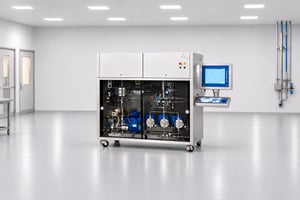
When a chromatography process moves from pilot to production, the equipment specification needs to describe how the selected configuration will support manufacturing. Required capacity, operating functions, site interfaces and verification need to form a coherent basis for the design.
The pilot installation provides useful input. Review its configuration against the planned production applications, including processing, cleaning and product changeover. The resulting specification can then explain which functions are required and the operating conditions they must support.
For teams preparing an equipment purchase, this also provides a clearer basis for comparing proposals. Similar flow and pressure ratings can accompany different arrangements for automation, installation, maintenance and testing.
Peak Biotech develops and manufactures chromatography columns and engineered systems from customer requirements. The following considerations help connect those requirements with the proposed equipment and delivery scope.
Define the Production Cases Behind the Specification
A dedicated installation may support one process and its associated cleaning sequence. A multiproduct installation may need several operating cases with different flow ranges, solvents and collection arrangements.
Describe those cases together with the functions already selected for production. Include the available process conditions, production capacity and site information, and record any points still requiring clarification.
An existing URS, process description or equipment diagram can provide context. Where information is preliminary, identify the assumptions used for the proposed design and quotation.
This makes it easier to assess whether different equipment proposals address the same production needs.
Review the Column and System as a Connected Installation
Column diameter, packed bed height and operating conditions provide the basis for reviewing the column alongside the system that will serve it.
Connections, materials and pressure ratings need to be compatible across the installation. Distinguish normal operating pressure from maximum allowable pressure and the agreed mechanical design basis, including the relevant operating cases and protective measures.
Packing, unpacking and maintenance also influence the proposed arrangement. As column dimensions and component weights increase, supporting equipment and handling access deserve consideration alongside the normal operating position.
For example, a slurry unit or bottom handling arrangement may form part of the installation. Identify whether these items are included in the equipment proposal, supplied separately or already available at site.
Make the Proposed System Configuration Clear
Once the production functions have been selected, the technical proposal needs to show how they will be implemented together.
Review the proposed arrangement against the required operating ranges, buffer and solvent supply conditions, collection destinations and column connections. Confirm how the equipment interfaces with upstream supply, downstream collection and cleaning services.
The supporting drawings and functional descriptions need to be sufficiently developed for the project team to assess the proposed configuration. Record open decisions and any options that affect the delivery scope.
For an earlier review of which functions to carry into production, see Scaling a chromatography system from pilot to production.
Clarify Automation and Site Integration Responsibilities
The supplied automation and the wider site installation need an agreed division of responsibilities.
Identify which functions are included with the equipment and which depend on other site systems. This includes the operator interface, communication requirements and the scope for recipes, user access, data recording, alarms and recovery after an interruption.
For each interface, agree who supplies, connects and verifies it. The same review can establish which functions can be demonstrated before delivery and which require the completed site installation.
A clear description of these responsibilities helps the project team assess the work associated with each proposal.
Assess Installation and Maintenance Access
Check the proposed equipment against delivery routes, doorway dimensions, available space and utility connections. Include the hazardous area classification and applicable equipment approval requirements in the design basis.
The operating footprint needs to be considered alongside access for service and component removal. A column may fit its production position while requiring additional room for packing, bottom removal or maintenance.
Compression arrangements can also influence installation height. Peak Biotech DAC columns use internal hydraulic compression with 20% ethanol in water as the hydraulic fluid. The compression arrangement sits within the column, reducing the overhead space required for that function.
Review the selected design against the actual facility, including mobility, floor conditions and handling procedures.
Agree the Evidence that will Accompany the Equipment
The selected configuration provides the basis for defining what will be demonstrated during testing and qualification.
During procurement, agree the documentation package, review stages and acceptance criteria. Establish what will be tested at the factory, what requires site verification and how deviations will be resolved.
Identify the required scope for factory acceptance testing, site acceptance testing and qualification support. Supplier protocols and records need to be considered alongside the customer’s site procedures and qualification approach.
Peak Biotech offers execution or support of installation qualification and operational qualification activities. The documents, site work and responsibilities are agreed for the individual project.
When comparing proposals, consider the equipment together with the documentation, testing and support included in the delivery.
Prepare the Information for an Equipment Review
Requirements checklists can help organise the available information before detailed specification.
The column checklist covers diameter and bed height, chromatography media, flow, pressure, temperature, product contact materials, packing equipment and facility requirements.
The system checklist covers operating ranges, buffer and solvent supply, process measurements, fraction outlets, additional process functions, materials, utilities and automation interfaces.
Both include project timing and requested documentation or qualification support. Complete the information available and identify open points for review.
The completed checklists can be used with existing process and site documents as the basis for a preliminary equipment configuration and budgetary quotation. Final specifications are developed from the approved URS and detailed engineering requirements.
Download the column requirements checklist
Download the chromatography system requirements checklist
For questions about a specific configuration, contact Peak Biotech.