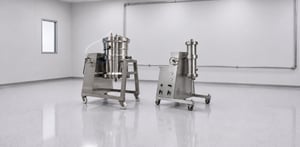
HPLC and MPLC Columns

GLP-1 and Peptide Purification Chromatography

Custom production scale MPLC and HPLC chromatography equipment engineered around your purification process,d production requirements and GMP facility.

Planning a GLP-1 or Peptide Production Project?

When a new GLP-1 or peptide process has to be brought into production, the chromatography equipment has to support that process at the required production scale. The chromatography method defines how the purification has to run. Production capacity defines the scale. The hardware has to bring the two together within the pressure, flow, solvent, facility and GMP requirements of the manufacturing environment. 

Peak Biotech engineers the production hardware around the process and the required capacity. Column diameter, bed height, pressure range, flow capacity, wetted materials, system configuration and physical layout can be configured for the individual project and the scale the process requires. 

Our focus is GMP production equipment. Peak Biotech engineers production scale MPLC and HPLC columns, chromatography systems and supporting equipment as one project specific solution around the process that has to run. Pressure, flow, solvent handling, packing, instrumentation, facility constraints, documentation and maintainability are considered together from the beginning.



Engineered around Process and Facility

Process First Engineering

Media, flow, pressure, solvents, scale and URS define the equipment specification.

Existing Facility Integration
Compact internal DAC architecture supports projects where height, access, floor space and service areas are already defined.
MPLC and HPLC Platform

Pressure architecture is selected according to the individual separation rather than a fixed product route.

Peptide Purification at Production Scale
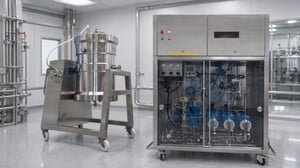
Chromatography Column and System

Preparative liquid chromatography plays a central role in therapeutic peptide downstream processing, separating the target peptide from process related impurities and closely related peptide species.[1] The exact purification strategy depends on the individual process, but once a chromatography step has been established, its operating conditions define what the production equipment has to support. 

The separation chemistry, stationary phase and process conditions provide the engineering basis for that equipment. Media and particle characteristics, bed geometry, required production capacity, flow, pressure, solvents and temperature influence the column and system requirements, while packing, instrumentation and facility interfaces determine how the chromatography has to operate within the production environment. 

For many peptide separations, reversed phase chromatography is important. Preparative HPLC is widely used for peptide purification where the established chromatography method requires higher pressure operation, and acetonitrile is commonly used as an organic modifier in reversed phase peptide chromatography.[2][3] These established process choices have direct consequences for pressure capability, wetted materials, solvent handling, pump and valve architecture and the overall equipment configuration. Peak Biotech engineers production scale HPLC columns and chromatography systems around the required media, bed dimensions, flow, pressure, solvents and production capacity. The purification method remains with the process owner, while our engineering focuses on the equipment required to support it. 

+150 Columns and Systems Delivered (and Still Active)


Production Scale Chromatography for GLP-1 and Peptides

The required production capacity and chromatography conditions determine the column size, flow, pressure, materials and system configuration needed to run the process at production scale. A larger required bed volume influences column dimensions, while linear velocity and column area determine the volumetric flow the system must deliver. Media, particle size, bed height and viscosity influence pressure requirements, and the process and cleaning chemistry guide the selection of wetted materials. Gradient operation, instrumentation and fraction handling add further requirements to the chromatography system. 

These process requirements are considered together with the production environment. Available footprint and height, access routes, utilities, hazardous area classification and equipment handling can all influence how the final column and system should be configured. Peak Biotech engineers the equipment around this complete set of requirements, allowing column diameter, bed height, pressure capability, flow capacity and system architecture to be configured for the required production scale and the individual manufacturing environment. 
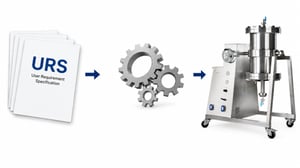
User Requirement Specification

Engineering Principle

The chromatography method defines the separation. Production scale determines the mechanical, hydraulic and facility requirements needed to execute that method.

MPLC and HPLC for Peptide Purification

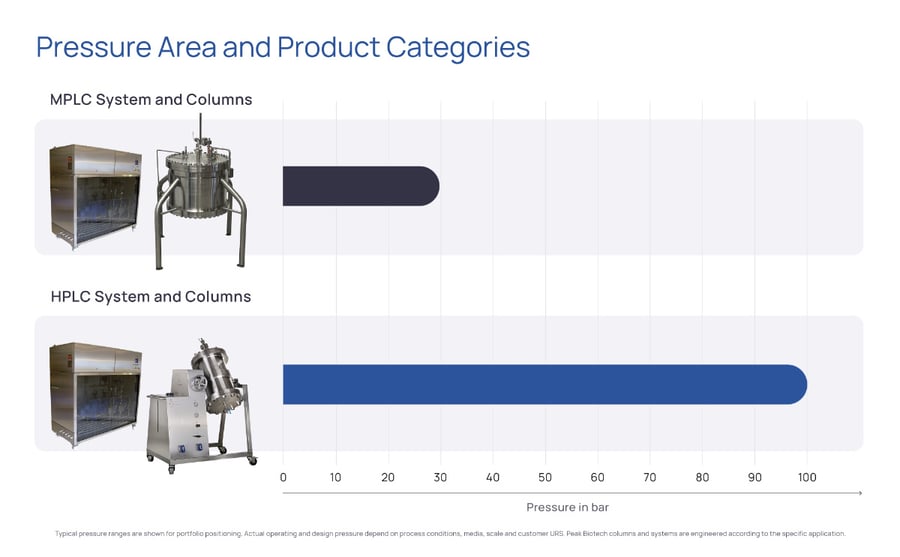
The chromatography process determines the pressure range the production hardware has to support. The established method, media, particle characteristics, bed geometry, linear velocity and solvent conditions define the required pressure and flow conditions. Peak Biotech supplies both MPLC and HPLC columns and systems, allowing the production platform to be selected around those process requirements. 

Engineering consideration

MPLC

HPLC

Typical Peak reference range

Up to approximately 30 bar, depending on configuration

Up to approximately 100 bar, depending on configuration

Relevant operating window

Medium pressure chromatography where the established method and media operate within this range

Higher pressure chromatography where the method, particle characteristics or operating velocity require a larger pressure window

Media context

Can include larger particle or polymeric media suited to medium pressure operation

Can include finer rigid media such as silica based materials where higher pressure capability is required

Scale up question

Can support high volumetric flow at large diameter where the method remains within the medium pressure window

Provides the pressure capability required when packed bed and system resistance demand a higher operating window

Peak scope

Column, system, packing configuration and supporting equipment

Column, system, packing configuration and supporting equipment

Final specification

Defined from process requirements and URS

Defined from process requirements and URS


Peak Biotech MPLC and HPLC platforms cover different pressure ranges, with the final design pressure defined for the individual application. Media type, particle size, bed height, viscosity, linear velocity, packing requirements and process pressure all contribute to that specification. 

The resulting MPLC or preparative HPLC architecture is engineered to provide the pressure capability, flow capacity and system functionality required by the peptide purification step at the required production scale.

Custom Chromatography Equipment for Peptide Production

The chromatography method provides the process variables; the production requirement determines how much hardware capacity is needed. Media and particle size influence packing behaviour and hydraulic resistance. Bed height and diameter define bed volume. Linear velocity and cross sectional area define volumetric flow. Pressure drop across the packed bed has to fit within the pressure budget of the complete flow path. Process chemistry defines material requirements, while the facility establishes the physical and utility interfaces the equipment has to meet. 
Pressure area and product categories

Peak Biotech uses these requirements to engineer the production configuration from the outset. A project may require a larger diameter, a particular bed height range, a higher pressure class, a specific solvent compatible material set or a system architecture tailored to the available room and utilities. Each of these becomes a design input for the project specific column, system and supporting equipment. 

Peak Biotech Scope

You define the chromatography process and operating requirements. Peak Biotech engineers the column, chromatography system and supporting hardware needed to execute them.

Dynamic Axial Compression Columns for Peptide Purification

At production scale, the selected bed volume and media also have to be packed and maintained reproducibly in a column built for the required diameter and pressure class. Peak Biotech uses the Dynamic Axial Compression principle across its LP, MPLC and HPLC column platforms. A movable piston establishes and compresses the packed bed, while the detailed hydraulic and structural architecture is engineered for the application. 

The packed bed is both a chromatographic medium and a mechanical structure. The particles must form a stable porous bed through which the mobile phase can flow. Packing, compression, particle characteristics, wall interaction and flow distribution therefore become production equipment considerations as diameter and resin volume increase. 

Peak Biotech uses an internal hydraulic compression chamber with 20% ethanol in water as the compression liquid. The integrated architecture reacts the axial compression load within the column assembly and provides bed compression without an external overhead compression frame. Packing equipment and piston movement architecture are configured according to column platform and size. 
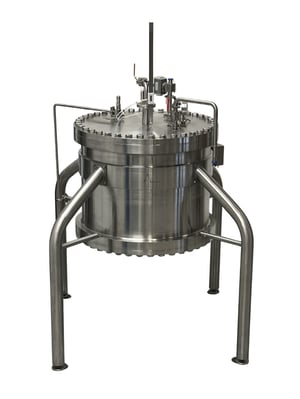
LPLC 1200

Packing, Slurry Handling and Unpacking
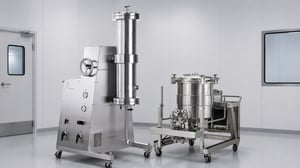
HPLC Column and Slurry Unit

A production column also has to support the way the media will actually be handled. Packing begins with the selected media and the packing method defined for the process. Slurry preparation, transfer into the column, piston movement, consolidation and final bed compression must work together at the required resin volume and production scale. 

The practical workflow differs between media types and column configurations. Softer media can allow slurry based unpacking and recovery, while rigid media can require a different mechanical approach. Peak Biotech therefore reviews packing and unpacking while the column is being configured so the handling concept is part of the production solution from the beginning. 

For larger resin volumes, slurry preparation becomes its own equipment question. Peak Biotech can supply slurry units and supporting handling equipment configured around the required volume, media behaviour, containment concept and transfer workflow. 

Chromatography Systems for GLP-1 and Peptide Purification

The chromatography system supports the same production process as the column. Required flow, pressure, gradient formation, solvent supply, instrumentation and fraction handling define the system functions and capacity needed to run the chromatography step. 

Peak Biotech chromatography systems are custom engineered from the process, capacity, URS and facility requirements. Pumps, valves, instrumentation, tubing, process connections, control interfaces and automation functions are sized and configured for the chromatography method and the production environment in which the system will operate. 

Engineering the column and system together allows the complete production flow path to be matched to the process from the beginning. Bed volume, pump capacity, tubing dimensions, valve architecture, gradient formation and pressure capability can be developed as one project specific solution. 

Chromatography Equipment for GMP Peptide Production

The production hardware also has to support the chemistry used by the established process. Preparative peptide chromatography can involve organic solvents including acetonitrile, which is documented in reversed phase HPLC and preparative peptide separations.[2][3] The complete solvent and cleaning regime therefore forms part of the engineering basis alongside pressure and flow.

Peak Biotech selects wetted materials according to the customer URS and defined chemicals. Stainless steel AISI 316L is standard for wetted steel in relevant Peak configurations, with other materials available where required. Final compatibility remains project specific because solvent concentration, temperature, cleaning chemistry, seals and other wetted components must be considered together.

The specified production environment also defines hazardous area classification, pressure vessel documentation, process connections, instrumentation and automation scope. Peak Biotech incorporates these requirements into the project specification so the equipment is configured for the actual installation and customer URS.

Engineering Chromatography Equipment around Your Facility
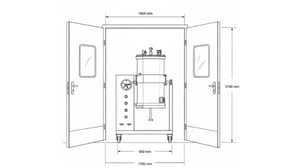
Column Facility Drawing

Custom production equipment also makes it possible to engineer around the facility that will receive it. Existing rooms can already have defined ceiling height, door openings, floor loading, utility locations, automation standards, operator routes and maintenance zones. These constraints can be incorporated into the equipment architecture from the beginning. 

Peak Biotech can adapt column and system geometry to the available production area while preserving the process requirements. Equipment movement, access to the column bottom, distributor and frit maintenance, packing equipment, hose routing and component handling can all be incorporated into the project architecture from the beginning. 

For selected Peak Biotech HPLC configurations up to Ø800 mm, mobile frames with lockable wheels can support movement without fixed floor installation. Actual movement and handling requirements depend on equipment size, weight, floor condition, site procedures and the surrounding facility. 

Scaling Peptide Chromatography to Production

Peak Biotech can engineer the production equipment directly for the required manufacturing scale. When the chromatography parameters originate from a smaller scale, their implications for production diameter, bed volume, flow and mechanical load are included in the engineering basis. For a circular column, cross sectional area is A = πD²/4. If diameter increases while bed height remains constant, bed volume increases with D². At constant linear velocity, volumetric flow also increases with D². 

An eightfold increase in diameter therefore produces a sixty fourfold increase in cross sectional area. If bed height and linear velocity are maintained, resin volume and volumetric flow increase by the same factor, while residence time can remain unchanged because bed height and linear velocity are unchanged. 

For an ideal geometrically scaled packed bed with the same media, porosity, bed height, mobile phase and superficial velocity, bed pressure drop remains governed by the bed properties and operating conditions rather than column diameter alone. The larger column requires substantially more total flow, so pump capacity and pressure losses in tubing, valves, distributors and other components become part of the production system design. 

Mechanical force introduces another D² relationship. In an axial compression column, pressure acting on an effective piston area generates force according to F = pA. At the same hydraulic pressure, increasing diameter increases theoretical axial force with the square of diameter. These relationships are part of engineering the production hardware for the required scale, even when the production equipment is custom designed directly for that scale. 

From Your Process Requirements to a Project Specific Configuration

A project can begin when the available process and production requirements are sufficient to start the engineering discussion. Defined chromatography conditions, required production capacity and known facility constraints provide the basis for developing the project specific column and system configuration while the remaining equipment parameters are clarified together.

Column Requirements

The column configuration follows the required capacity and the established chromatography conditions. Relevant parameters include media and particle size, bed height, flow or linear velocity, operating and packing pressure, process solvents, temperature, materials and packing requirements. Diameter and other dimensions can then be engineered for the required production scale where they are not already defined by the process.

Chromatography system requirements

The chromatography system is configured from the same process requirements. Flow and pressure, gradient or isocratic operation, buffer and solvent streams, inlet and outlet requirements, instrumentation, fraction handling, utilities, automation and documentation scope determine the system architecture needed to support the production step.

Facility and project constraints

The production environment completes the design basis. Available footprint and height, access routes, utilities, hazardous area classification, applicable regulations and equipment handling requirements can be incorporated into the project specific architecture.

Bring your production requirements to the engineering discussion

Bring the process information and production requirements that are already defined. Peak Biotech can use them to develop the project specific column, system and supporting equipment and identify the remaining engineering decisions. The Peak Biotech column and chromatography system requirement checklists can be used to structure the technical discussion.

Frequently Asked Questions

What chromatography equipment is used for production scale peptide purification?

Production scale peptide purification can use MPLC or preparative HPLC columns and chromatography systems depending on the established method, media, flow and pressure requirements. Peak Biotech configures the column, system, packing concept and supporting equipment around the process, production capacity and GMP facility. 

Can Peak Biotech engineer preparative HPLC columns for peptide production?

Yes. Peak Biotech engineers production scale preparative HPLC columns and chromatography systems around the required column diameter, bed height, media, flow, pressure, process solvents, facility requirements and project URS.

How does Peak Biotech support an established GLP-1 purification method? The chromatography method, media and separation chemistry provide the process basis. Peak Biotech engineers the custom GMP production hardware around those requirements and the production capacity the process has to support.
Can one GLP-1 purification process use both MPLC and HPLC?

Yes. If the established process contains chromatography steps with different pressure and media requirements, Peak Biotech can supply both MPLC and HPLC platforms. Each step can be configured around its required pressure, flow, media and production scale. 

Can Peak Biotech equipment be configured for acetonitrile?

Yes. Acetonitrile can be used in relevant Peak Biotech chromatography configurations. Final material selection is made against the complete process chemistry, concentration, temperature, cleaning conditions and operating requirements.

How does column diameter affect scale up?

Cross sectional area increases with the square of diameter. At constant linear velocity, volumetric flow therefore also increases with the square of diameter. Bed volume follows the same relationship when bed height remains constant. In an axial compression column, theoretical piston force at constant hydraulic pressure also increases with area. 

How does column diameter influence packed bed pressure drop?

In an ideal geometrically scaled bed, media, porosity, bed height, viscosity and superficial velocity govern the packed bed pressure drop. Increasing diameter increases the total flow required at the same linear velocity, so the complete chromatography system must be sized for the resulting flow and system pressure losses. 

What is Dynamic Axial Compression? Dynamic Axial Compression uses a movable piston to establish and compress the packed chromatography bed. Peak Biotech applies the same fundamental DAC principle across LP, MPLC and HPLC platforms, with the detailed mechanical and hydraulic design adapted to the application.
Can Peak Biotech support an existing facility? Yes. Custom column and system geometry can be engineered around defined room geometry, utilities, process connections, automation interfaces, access routes and maintenance requirements while supporting the chromatography process. 
What should we send Peak Biotech for an initial review? The useful starting point is the process requirement and the required production capacity. Media, bed height, flow or linear velocity, pressure and process chemistry help define the column configuration. Gradient architecture, solvents, instrumentation, utilities and facility constraints help define the system and installation scope. Parameters that remain open can be developed through the project specific engineering discussion.

Production Chromatography Hardware Built around the Process

The chromatography process defines what the equipment has to achieve, and the production requirement defines the scale. Peak Biotech engineers the column, chromatography system, packing concept, process interfaces and supporting equipment around those two requirements as a custom GMP production solution.

Peak Biotech uses the process, capacity and facility requirements as the basis for the production hardware. Bring the production requirements to the engineering discussion and the column, system and supporting equipment can be configured around what the process actually needs.